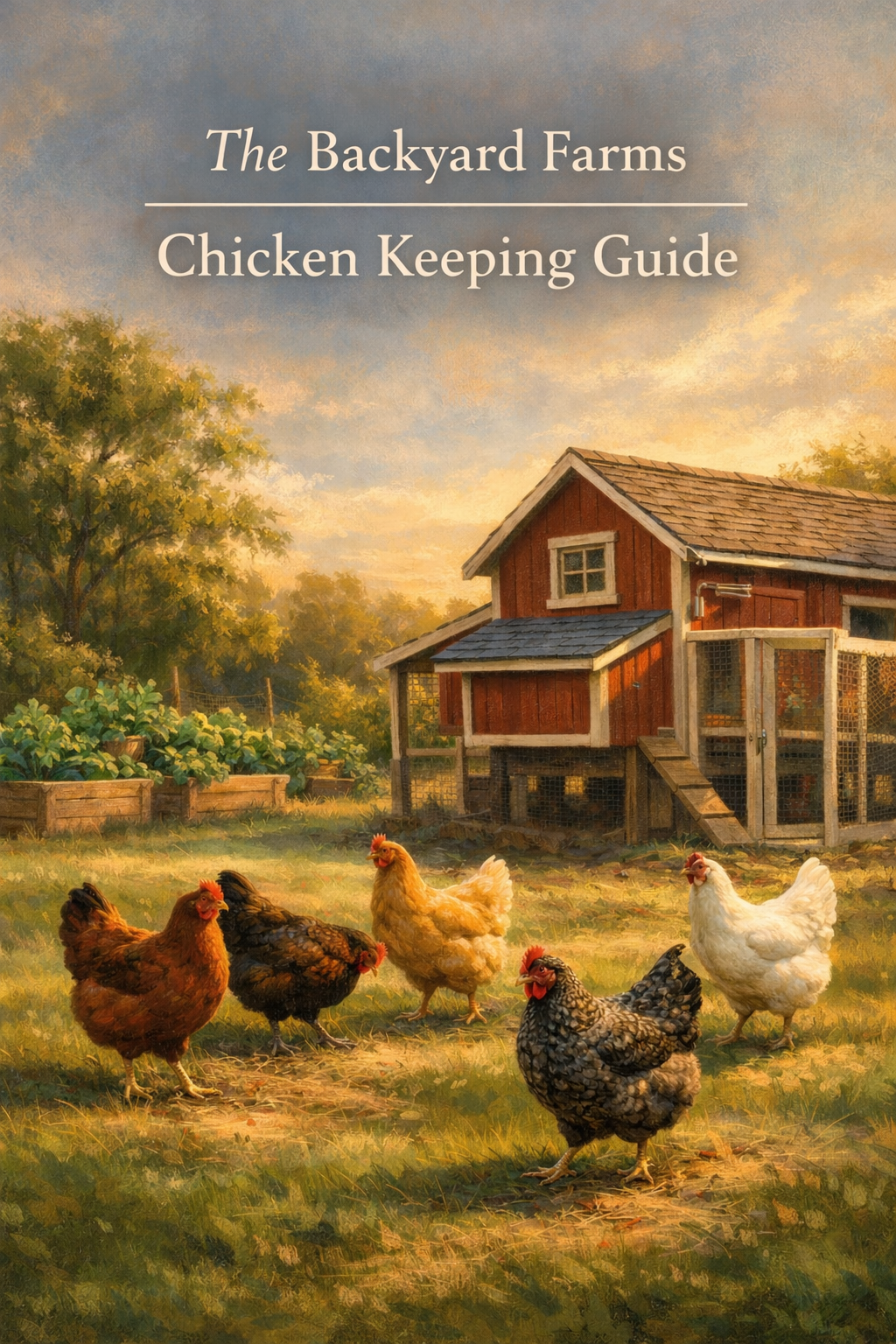
The Backyard Farms
Guide to Backyard Chicken Keeping
Guide to Backyard Chicken Keeping
Couldn't load pickup availability
Backyard chickens don’t fail because they’re difficult to care for.
They fail because most setups are built without a system.
The Backyard Chicken System is a structured, practical guide for homeowners who want predictable egg production, lower maintenance, and fewer preventable problems. Instead of scattered tips or decorative inspiration, this guide focuses on ratios, infrastructure standards, and management principles that keep small flocks stable over time.
This is not a hobbyist overview. It’s an operations manual for running a backyard flock correctly.
What you’ll learn inside
-
Why 4–12 hens is the optimal flock size for stability and efficiency
-
How to plan space, layout, and infrastructure before buying birds
-
Coop and run design standards that prevent moisture, odor, and predator losses
-
Ventilation and airflow strategies that protect flock health year-round
-
Breed selection based on performance, climate tolerance, and behavior
-
Seasonal management systems for heat, cold, and environmental stress
-
Feeding and nutrition strategies that support consistent egg production
-
Daily health monitoring and early-warning indicators
-
Waste management and compost integration for backyard efficiency
-
Cost-per-dozen calculations and realistic production expectations
-
A structured 30-day setup plan to launch a flock the right way
Who this guide is for
-
Homeowners raising or planning to raise 4–12 backyard hens
-
People who want reliable eggs, not constant troubleshooting
-
Anyone tired of conflicting advice and trial-and-error management
What this guide is not
-
A decorative coop or aesthetic inspiration book
-
A breed catalog or sentimental overview
-
A collection of unprioritized tips
This guide treats chickens as a managed system—where structure, consistency, and planning determine success.
Build it correctly once.
Reduce daily friction.
Produce eggs reliably.
Share